
In the fast-paced environment of a professional bakery or pizzeria, a commercial dough sheeter is much more than just a convenient tool—it is a strategic asset. Often referred to as a pizza dough sheeter due to its widespread use in pizzerias, this machine is commonly referred to as a pizza dough sheeter. It is meticulously designed to produce perfectly uniform dough on a large scale. Whether you’re making Neapolitan pizza crusts, flaky croissants, or bread with a consistent texture, a dough sheeter offers a level of precision that manual rolling simply cannot match.
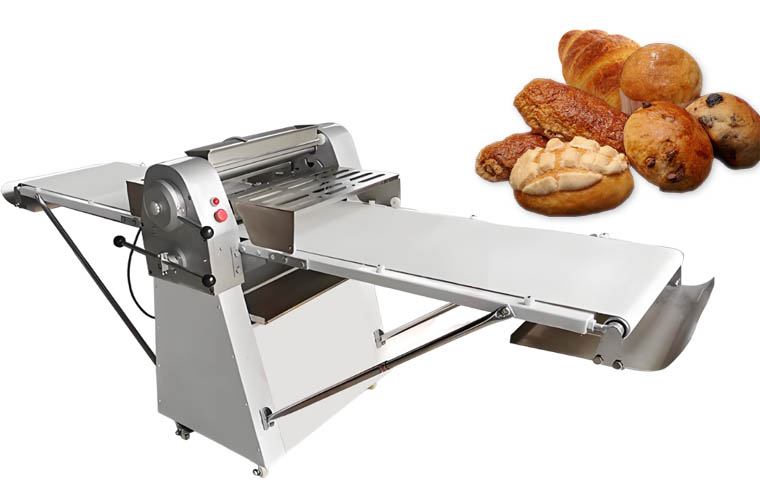
How a Commercial Dough Sheeter Works
At its core, a dough sheeter operates through a series of calibrated rollers that progressively flatten dough to a desired thickness. The operator places a pre-weighed ball of dough between the main rollers; as the rollers rotate, they flatten the dough into an initial sheet. The sheet then passes through subsequent guide rollers or is conveyed to a conveyor system, with the gap between the rollers gradually decreasing to achieve precise thickness tolerances—typically within ±0.5 millimeters.
High-end models are equipped with digital thickness control, variable roller speed settings, and a reverse rolling function, allowing the dough to pass through the machine multiple times to promote gluten development and improve dough texture. This is particularly important for laminated pastries (such as puff pastry and Danish pastries), as uniform fat distribution depends on even rolling that does not damage the gluten structure.
Key technical specifications to consider when selecting a commercial dough sheeter include:
- Roller width (typically 400–600 mm for pizzerias, up to 1000 mm for industrial bakeries)
- Motor power (0.5–2 kW, depending on dough hardness)
- Sheet thickness range (0.5–25 mm, adjustable via manual or servo-driven mechanisms)
- Production capacity (up to 200–500 dough pieces per hour)
- Belt material (food-grade PVC or PU, often with anti-stick coatings)
Why a Pizza Dough Sheeter Is Indispensable
1. Uncompromising Uniformity
A pizza dough sheeter ensures that every crust is exactly the same thickness and density, which directly impacts the baking results. Uniform dough expands predictably in the oven, preventing issues such as uneven browning, undercooked centers, or burnt edges. For pizza shops, this means every pizza delivers a consistently crispy texture—both chewy and crispy.
2. Better Gluten and Texture Control
Unlike a rolling pin, a dough sheeter does not over-knead the dough and cause it to lose air; instead, it gently flattens the dough while preserving the fermentation gases and gluten network. This allows the pizza to rise better in the oven, resulting in a lighter, fluffier interior and superior texture—which is crucial for both bread and pizza.
3. Scalable Production Efficiency
Rolling out each dough ball by hand takes 2–3 minutes, whereas a commercial dough sheeter completes the task in less than 10 seconds. For high-volume pizzerias, this translates to a daily savings of 8–12 labor hours, allowing staff to focus on topping preparation, quality control, and customer service.
4. Optimized Ingredient Costs
Standardized thickness ensures precise portion control. By avoiding over- or under-rolling, dough waste is reduced, and each batch yields an exact number of pizzas, thereby improving the predictability of food costs—which is crucial in commercial baking.
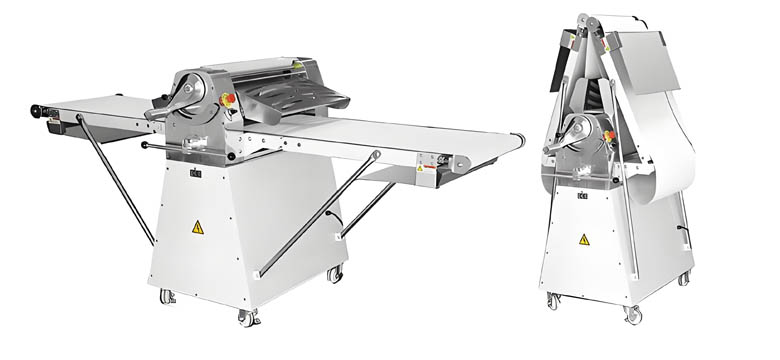
Maintenance and Troubleshooting
Proactive maintenance is essential to maximize the service life of the dough sheeter and maintain its performance. Here are some key technical points:
- Daily Cleaning Procedures: After each shift, use a food-grade scraper and a damp cloth to remove any residual dough and flour. Pay special attention to the ends of the rollers and the edges of the conveyor belt, as dough buildup in these areas can cause misalignment. Never use a high-pressure water jet, as moisture can damage the bearings and motor.
- Belt Tension and Misalignment: If the conveyor belt shifts to one side, this indicates uneven tension or wear on the edge guides. With the machine idling, adjust the misalignment screws in small increments (¼ turn). Replace the belt annually or when visible cracks appear—polyurethane belts typically last 2,000–3,000 operating hours.
- Roller Gap Calibration: Over time, roller wear can cause variations in thickness. Use a feeler gauge monthly to check gap accuracy. If the deviation exceeds 0.3 mm, consult the maintenance manual for recalibration or shim adjustment.
- Abnormal Noises: Grinding or squeaking noises usually indicate that dry dough has entered the gearbox or bearing housing. Never attempt to disassemble the machine yourself—contact a certified technician, as improper handling may damage the precision-machined rollers, each set of which is valued at $500 to $1,000.
- Lubrication Maintenance: All moving parts should be lubricated with food-grade, NSF-certified grease according to the manufacturer’s recommended intervals (typically every 500 operating hours).
Choosing the Right Commercial Dough Sheeter for Your Business
When investing in a commercial dough sheeter, consider your product mix and volume:
- Small pizzerias & cafes: Compact bench-top models (400 mm width, 0.75 kW) with manual thickness adjustment
- Mid-sized bakeries: Floor-standing units (600 mm, 1.5 kW) with digital controls and reversible sheeting
- High-volume plants: Heavy-duty sheeters (800–1000 mm, 2+ kW) with automatic stacking and conveyor integration
Also evaluate power supply compatibility (single-phase vs. three-phase), footprint, and after-sales support availability in your region.
In summary, the commercial dough sheeter has become an indispensable centerpiece for bakeries and pizzerias with its efficiency, precision and versatility. It not only improves productivity and ensures product quality, but also makes our busy baking schedules more manageable. For any bakery or pizzeria aiming to excel in quality and productivity, investing in a high-performance dough sheeter is not just a choice—it’s a competitive necessity.