
In industries such as fresh agricultural product processing, ready-to-eat food preparation, and catering logistics, vegetable washing has long been a labor-intensive bottleneck. Traditional manual washing methods are not only time-consuming but also produce inconsistent quality. When handling large orders, the washing process often becomes the weakest link in production efficiency. The emergence of ultrasonic vegetable washing machines has changed this situation, transforming vegetable washing from repetitive “manual labor” into a precise, efficient, and automated “technical process.”
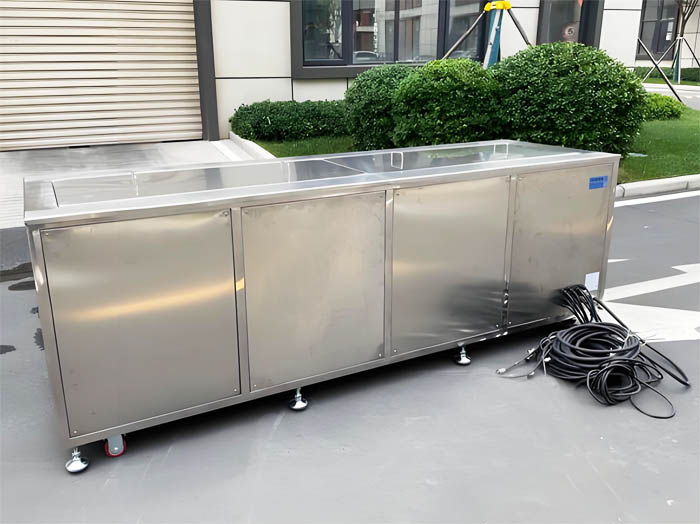
Limitations of Traditional Vegetable Washing Methods
Manual washing heavily relies on manpower. Each worker can handle a limited number of vegetables per hour. Root vegetables with dirt or leafy vegetables with complex surface structures require repeated rinsing, which is both time-consuming and water-intensive. Furthermore, the standards for manual washing vary from worker to worker. Problems such as missed washing and incomplete cleaning are common, potentially leading to food safety risks. For enterprises pursuing standardized, large-scale production, this inconsistent washing method is no longer feasible.
How Ultrasonic Vegetable Washing Machines Work
The core advantage of industrial vegetable washing machines lies in ultrasonic cavitation. During operation, high-frequency sound waves generate millions of tiny bubbles in the water. These bubbles implode instantaneously, releasing powerful shock waves that can penetrate tiny crevices, leaf veins, and rough surfaces, effectively removing: dirt and soil, pesticide residues, microbial films, insect eggs and larvae. This physical cleaning method reduces or eliminates the need for chemical cleaning agents, thereby lowering operating costs and avoiding the risk of chemical residues. It perfectly aligns with modern trends in food safety and clean labeling.
Efficiency Gains: Industrial vs. Manual Cleaning
Compared to manual cleaning, ultrasonic vegetable washing machines significantly improve production efficiency. For example, a medium-capacity system can process hundreds of kilograms of leafy greens per hour—equivalent to the output of a dozen workers. Furthermore, these machines support continuous operation and can be integrated into automated production lines for seamless washing, draining, and conveying. This reduces downtime between processing stages and improves overall factory efficiency.
Advantages of an Ultrasonic Vegetable Washing Machine
- Deep Cleaning Capabilities: Cavitation creates localized high-pressure micro-jets that penetrate deep into blind holes, narrow crevices, and complex geometries—areas that traditional cleaning methods struggle to thoroughly clean.
- Consistent Cleaning Results: Regardless of operator skill level or fatigue, every batch of fruits and vegetables achieves the same cleaning effect. As long as the surface of the produce is wetted by the cleaning solution, a uniform and reliable cleaning is achieved.
- Multi-functional Process Integration: Ultrasonic fruit and vegetable washers can be used with various media (water, ozone, or mild detergents) to achieve ozone-assisted disinfection, removal of dirt and wax, and surface polishing of certain root vegetables, among other functions. This supports batch processing of various agricultural products, significantly reducing overall processing time.
While industrial ultrasonic vegetable washing machines are designed for vegetables, they can also be used to clean fruits (grapes, berries, apples), seafood (shrimp, shellfish), and even some grains (legumes, lentils). This versatility makes them a valuable asset for food innovation labs, central kitchens, and frozen food producers. For any business engaged in large-scale or high-standard vegetable processing, upgrading to ultrasonic vegetable washing machines is no longer a luxury, but a necessity to remain competitive. The advantages are clear, from superior cleaning performance and labor cost savings to compliance with environmental regulations and ensuring food safety.
Invest in ultrasonic technology today and turn vegetable washing into a reliable, scalable, and sustainable advantage.